
Last updated September 23, 2026
Free visual inspection and a written scope of work before any mitigation begins - photos, moisture readings, and drying logs go in your claim file
The scope we write is the scope we bill. Anything new gets shown to you, in writing, before we touch it.

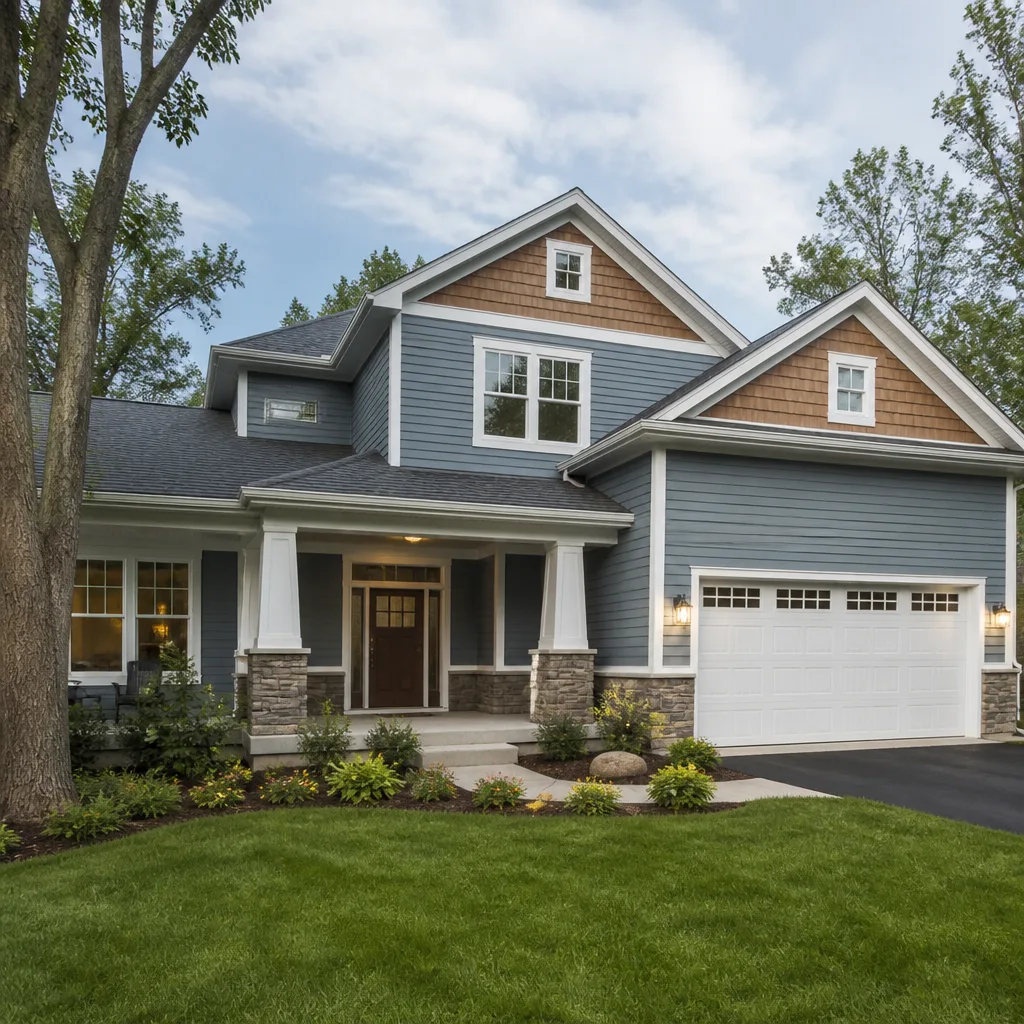
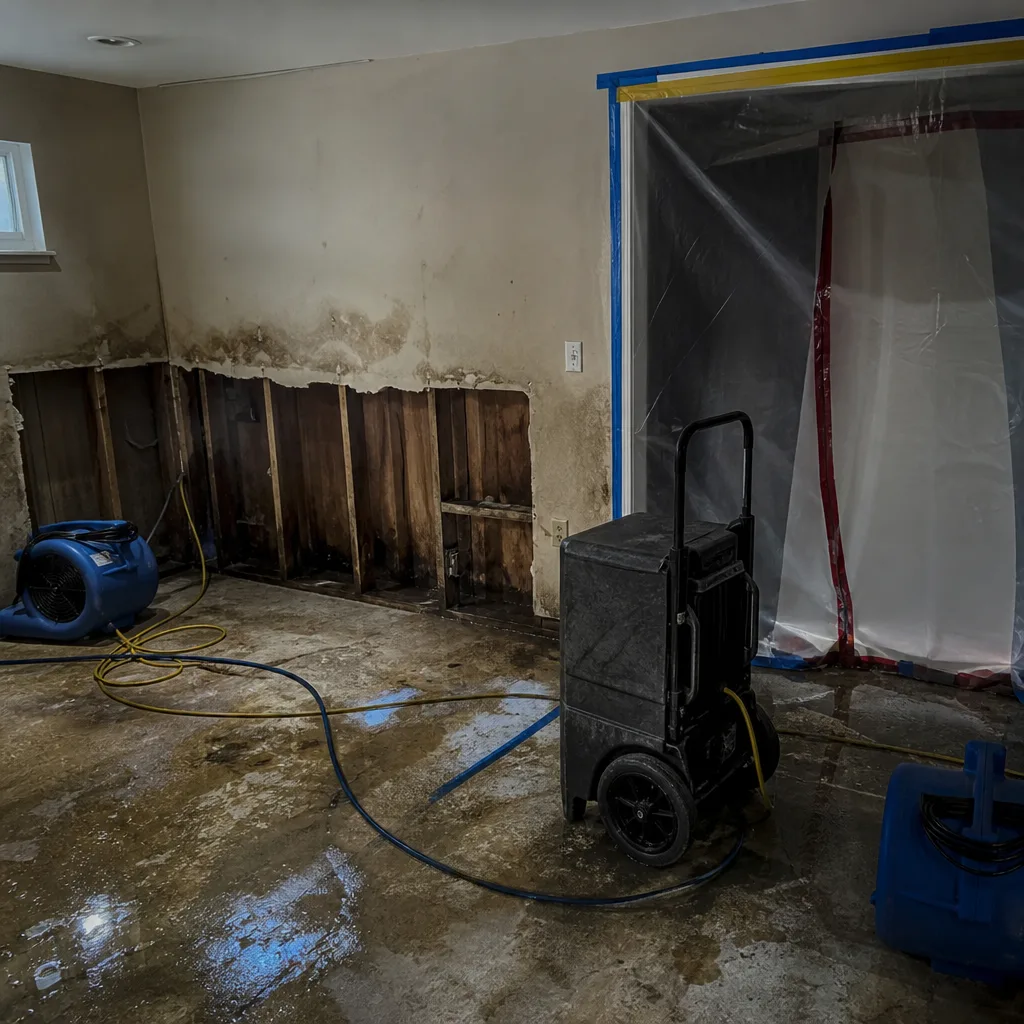 Before
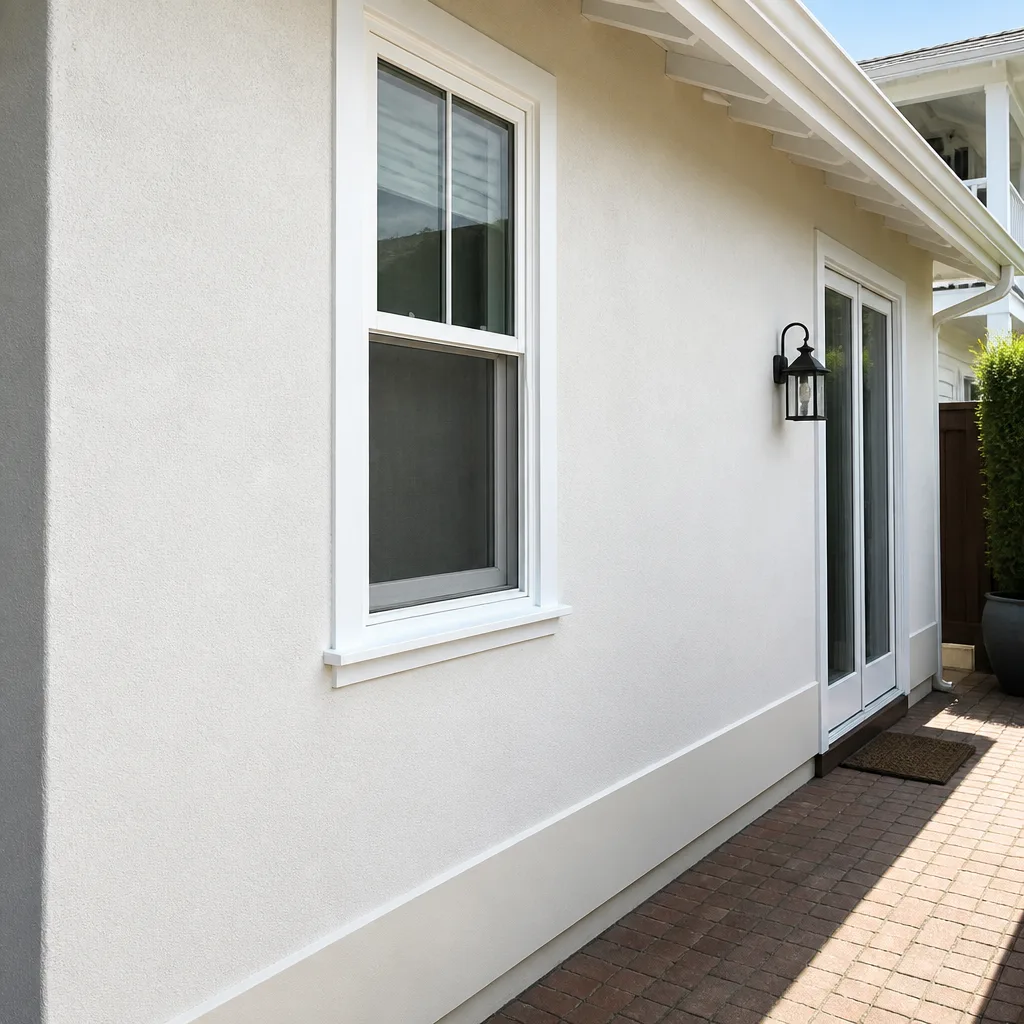 After
After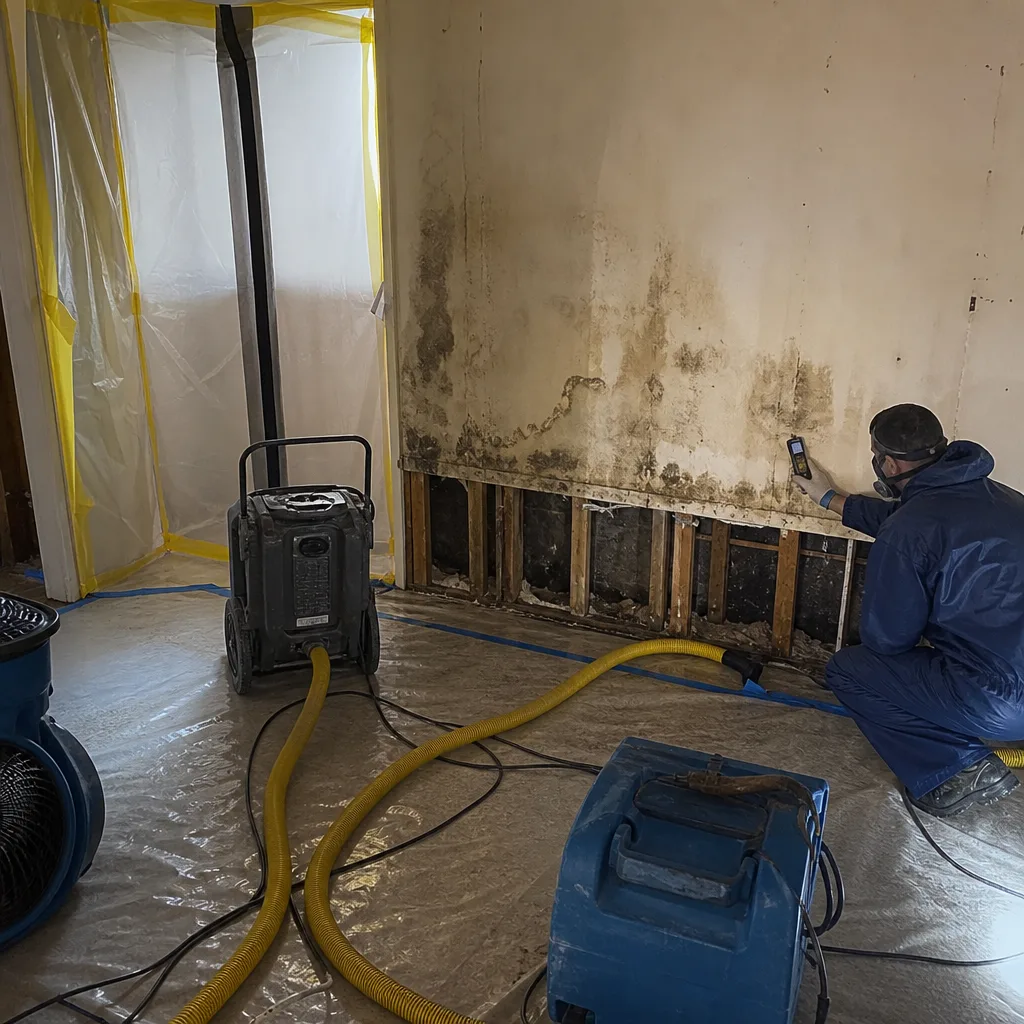 Before
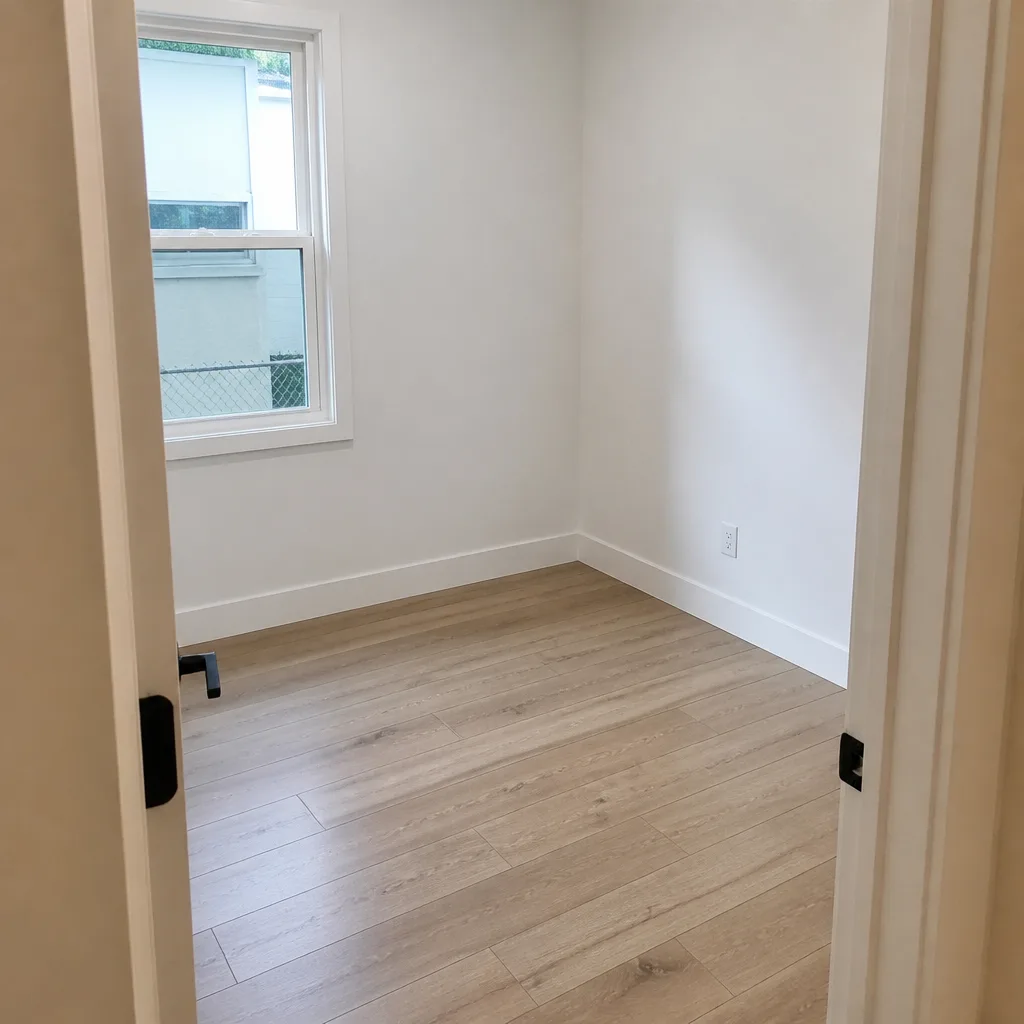 After
After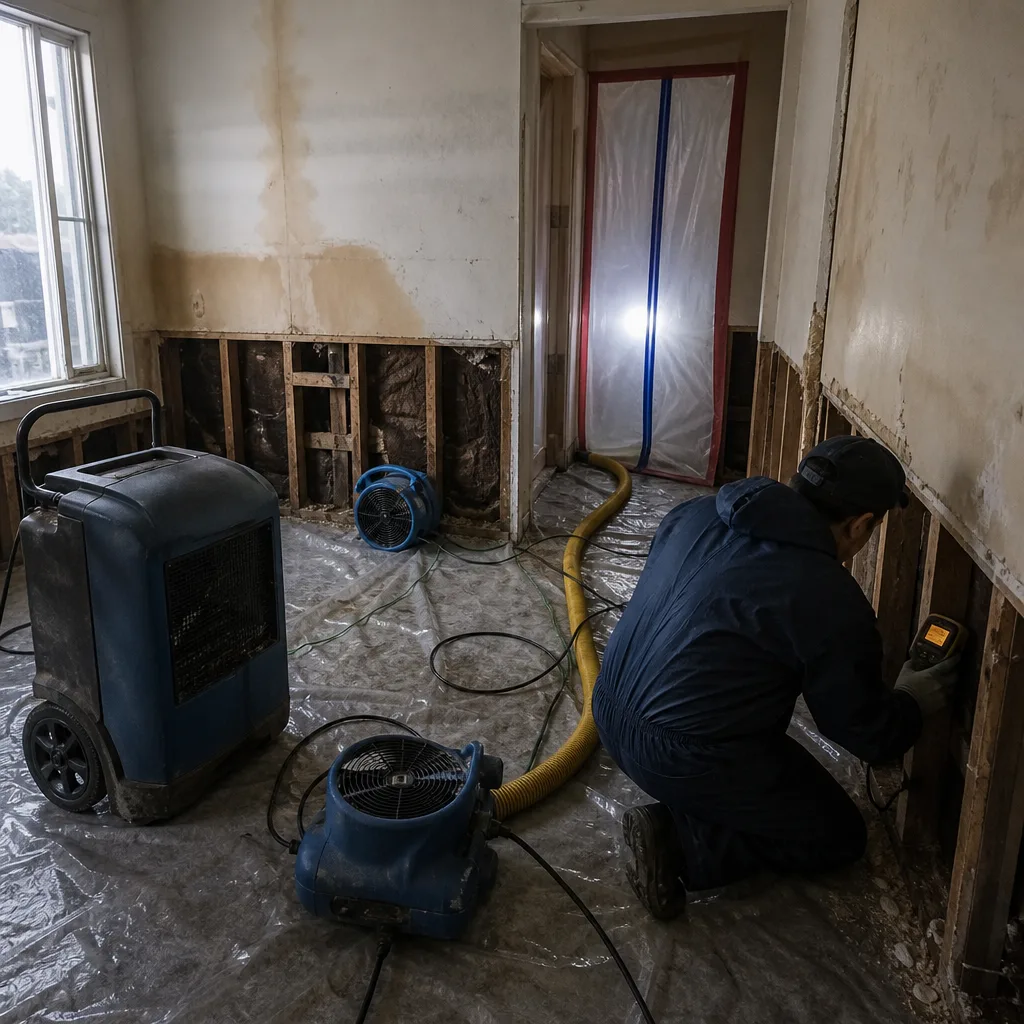 Before
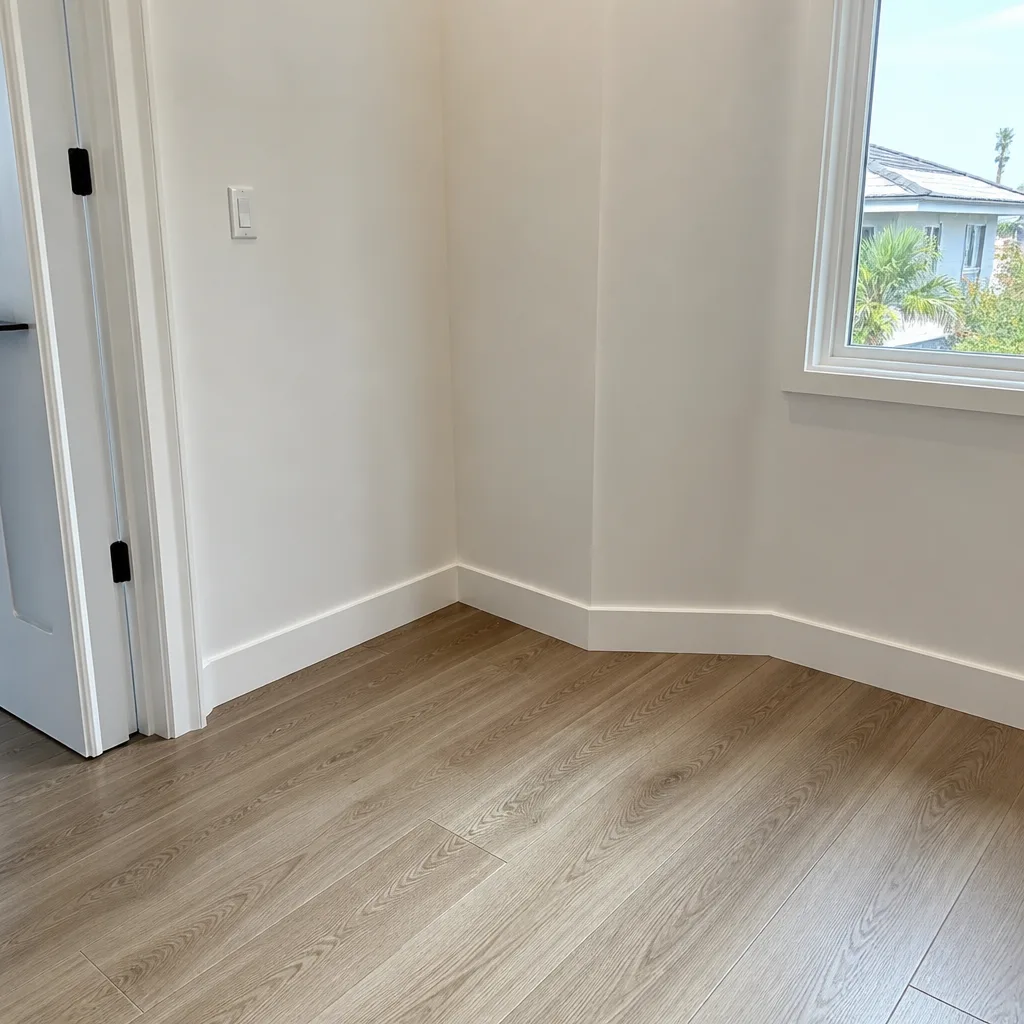 After
AfterSeasonal Damage Restoration Care for Manhattan Beach: Year-Round Homeowner’s Guide
The moisture damage that surfaces as a visible stain in December was almost always seeded in June, when condensation from marine layer air met an under-insulated wall cavity. In Manhattan Beach, we’ve traced enough loss histories to know the rainy season gets blamed for failures that started six months earlier. This guide - alongside our Complete Guide to Damage Restoration in Manhattan Beach - replaces the generic four-season template with what actually happens here: two distinct damage windows compressed by coastal geography, and the inspection protocols that catch problems before they become claims.
Quick Answer
Manhattan Beach homeowners face two primary damage seasons: marine layer compression (May-August), which drives condensation into wall cavities through cool interior surfaces, and atmospheric river season (November-March), which pressurizes roof penetrations and window perimeters. Effective seasonal care - detailed in our Water Damage Restoration Maintenance Checklist for Manhattan Beach Homeowners - means monitoring interior relative humidity at 60% RH during summer months, completing a six-point exterior inspection by October 15, and documenting everything to establish pre-loss condition for insurance purposes.
Table of Contents
- The Marine Layer Compression Season: May-August
- Atmospheric River Season: November-March
- Pre-Storm Inspection Sequence: September-October
- Post-Storm 72-Hour Response Protocol
- Year-Round Salt-Air Maintenance Schedule
- Documenting Inspections as Pre-Loss Evidence
- Common Mistakes to Avoid
- When to Call a Professional
- Frequently Asked Questions
- The Bottom Line
 Before
 After
AfterThe Marine Layer Compression Season: May-August
From May through August, Manhattan Beach sits under a persistent marine layer that pushes relative humidity above 80% for weeks at a time. The damage mechanism isn’t rain; it’s condensation. Warm, saturated exterior air contacts cool interior surfaces - north-facing drywall, slab edges, uninsulated stucco cavities - and the temperature differential forces water vapor to liquid. We’ve opened walls in September that held moisture readings of 28% wood moisture content (WMC), well above the 16% threshold where mold colonization accelerates.
The spaces to spot-check with a pinless moisture meter during this season:
- North-facing bedrooms above the garage - the garage slab stays cool, the bedroom above it stays warm, and the shared wall becomes a condensation plane.
- Closets on exterior walls - restricted airflow means surfaces stay damp longer; we’ve found active mold behind shoe molding in closet corners with no visible exterior leak.
- Kitchen soffits and cabinet toe-kicks - cold water supply lines create microclimates; check where the line enters the wall.
- Slab perimeter in homes built 1960-1990 - many Manhattan Beach properties in the Tree Section and Sand Section lack perimeter insulation.
Action thresholds by relative humidity reading:
| Interior RH Reading | Action |
|---|---|
| Below 55% | Monitor monthly; no action needed |
| 55%-60% | Increase ventilation; check moisture-prone areas weekly |
| 60%-65% | Deploy dehumidification; inspect with moisture meter; document readings |
| Above 65% | Active drying protocol; professional assessment recommended |
We use professional-grade drying systems from XPOWER and B-Air when interior RH sustains above 60% with visible condensation. The key is documenting the condition before it becomes a claim. A photo of your moisture meter reading dated June 15, with the RH log from that week, establishes that you maintained the property actively - not negligently - if mold appears later.
In the Hill Section, where elevation brings cooler night temperatures, we’ve seen condensation form on interior stucco surfaces that never occurs at sea level. The marine layer doesn’t behave uniformly across Manhattan Beach. Your inspection protocol should account for microclimate variation within a single ZIP code.
Atmospheric River Season: November-March
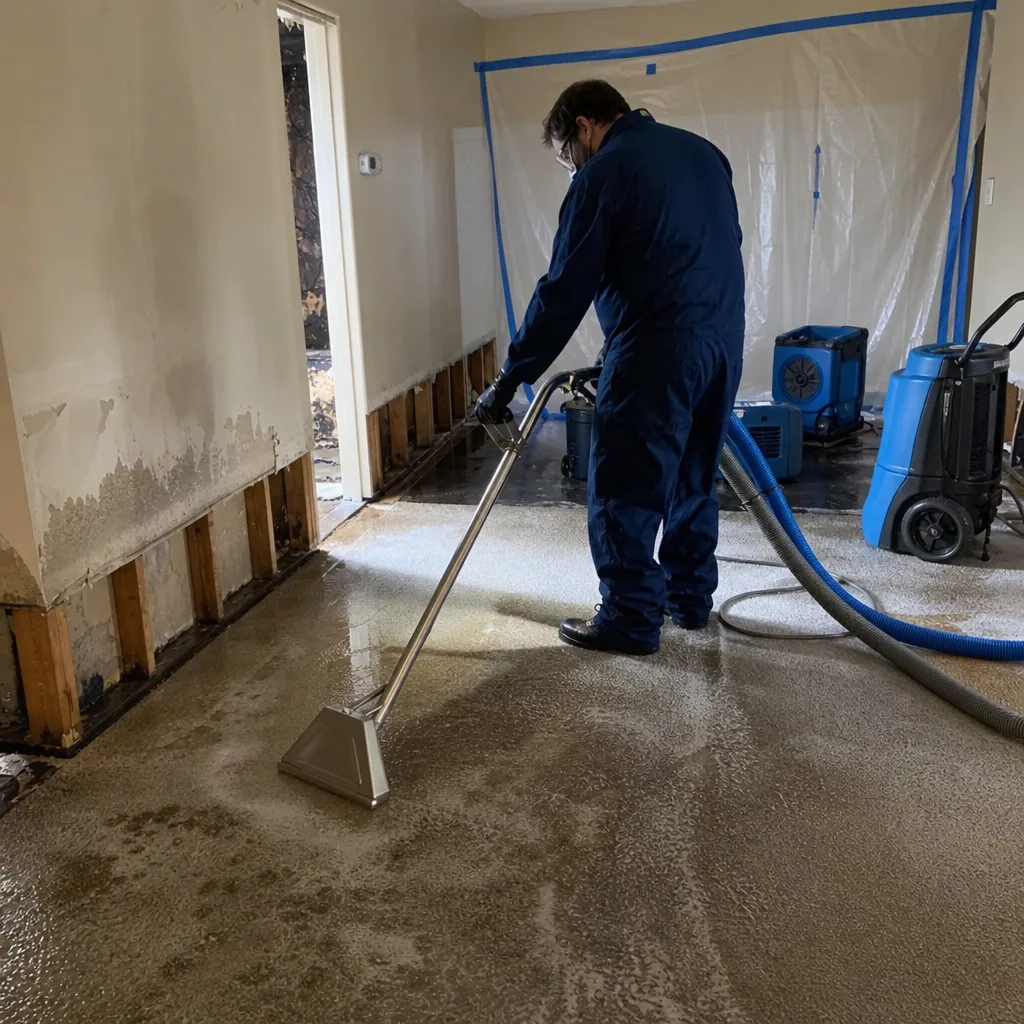
Atmospheric rivers deliver 30-50% of California’s annual precipitation in concentrated bursts. For Manhattan Beach, the risk isn’t total rainfall; it’s instantaneous loading on building envelopes that haven’t been pressure-tested in eight months. A single AR event can drive water through a roof penetration that showed no leak in light rain.
The failure pattern we document most often:
- Wind-driven rain at roof-to-wall intersections - stucco kickouts and step flashings are the first compromise point.
- Window perimeters in pre-2000 installations - single-piece fin windows without proper sill pan flashing.
- Deck ledger connections - where the deck meets the house, water follows the bolt line into the rim joist.
- HVAC condensate lines - rare freezing events split exposed lines, but more commonly, debris accumulation from Santa Ana wind cycles causes backup during the first heavy rain.
- Garage door thresholds - slope failure at the apron directs water under the slab; we’ve seen 400+ square feet of garage saturation from a threshold gap no wider than a pencil.
The critical difference from marine layer damage: AR events are acute and insurable, but only if the loss is sudden and accidental. Long-term deterioration at any of these five points gives the insurer a maintenance exclusion argument. Your October inspection documentation is what converts a denied claim into a paid one.
During active AR events, monitor these indicators:
- Water staining that appears during rain but disappears within 48 hours - this indicates a pathway, not yet a reservoir; address before the next event.
- Sounds in wall cavities during heavy wind - fasteners working loose, or water moving through a gap you haven’t found.
- Musty odor in HVAC startup after first rain - the coil and drain pan held moisture through summer; now it’s distributing it.
Our DryMark Restoration Manhattan Beach home page details our full water damage response protocol, including the drying log format we provide for insurance submission.
Pre-Storm Inspection Sequence: September-October
The six-week window between marine layer dissipation and first AR arrival is when Manhattan Beach homeowners can prevent most winter claims. We recommend completing this sequence by October 15, with photo documentation at each step.
Step 1: Roof field and penetration survey
Walk the roof or hire a licensed roofing contractor. Document with dated photos: pipe boot condition, chimney cricket flashing, valley integrity, and any lifted or cracked tiles. In Manhattan Beach, salt-air corrosion of galvanized flashings accelerates after year seven. We replace failed pipe boots on roughly 40% of pre-2010 homes we inspect.
Step 2: Gutter and downspout function test
Run water through each downspout with a hose. Check for: overflow at seams, separation from fascia, and discharge point clearance. Downspouts terminating at foundation level are common in the Sand Section; extend them 6 feet minimum or install dry wells. Water at the foundation finds slab penetrations.
Step 3: Window and door perimeter seal inspection
Probe caulk joints with a putty knife. Failed sealant pulls away clean; sound sealant resists. Pay particular attention to south and west exposures, where UV degradation is most advanced. We’ve documented caulk failure rates of 60%+ on windows installed before 2010 that have never been resealed.
Step 4: Deck and balcony structural interface
Check for: ledger board separation, rust staining at bolt lines, soft spots in decking, and proper slope to drain. Manhattan Beach’s 2017 deck ordinance requires inspection on certain structures; even exempt decks benefit from annual review. Water at the ledger rots the rim joist before you see interior damage.
Step 5: HVAC condensate and intake inspection
Clear condensate lines with nitrogen or a wet/dry vacuum. Inspect outdoor air intakes for debris accumulation from Santa Ana events. Check condensate pump operation if present. A failed pump in January, when the system runs in heat mode and produces condensate from defrost cycles, creates a slow leak that compounds for weeks.
Step 6: Foundation and grading walk
Walk the perimeter after irrigation or light rain. Water should flow away from the structure on all sides. In the Hill Section, check for soil settlement that creates reverse grade. In the Sand Section, where lots are smaller and setbacks tighter, neighbor runoff patterns matter; document any concentration directed at your foundation.
Store all photos with date stamps in a dedicated folder. Email yourself a copy. This is your pre-loss evidence file.
Post-Storm 72-Hour Response Protocol
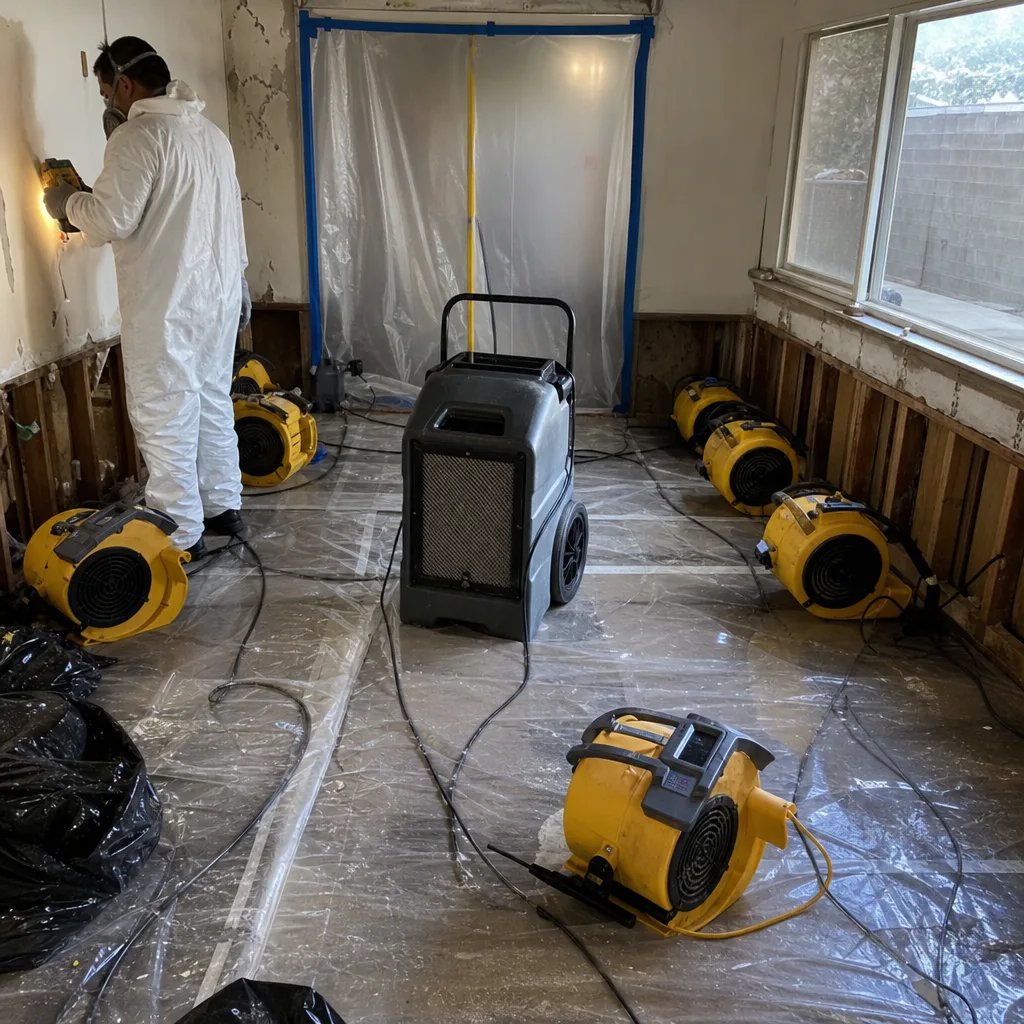
The first 72 hours after water intrusion determines whether you’re looking at drying or remediation. Mold growth initiates on wet organic materials in 48-72 hours under favorable conditions. In Manhattan Beach’s moderate temperatures, that window extends slightly, but not enough to wait.
Hour 0-6: Source stop and initial documentation
Stop the water if safely possible. Turn off the HVAC to prevent distribution. Photograph everything before moving anything: the water line, the affected materials, the apparent source. This is your first claims documentation. Then call for professional assessment if the affected area exceeds a single bathroom or if water has reached wall cavities.
Hour 6-24: Moisture mapping and material decisions
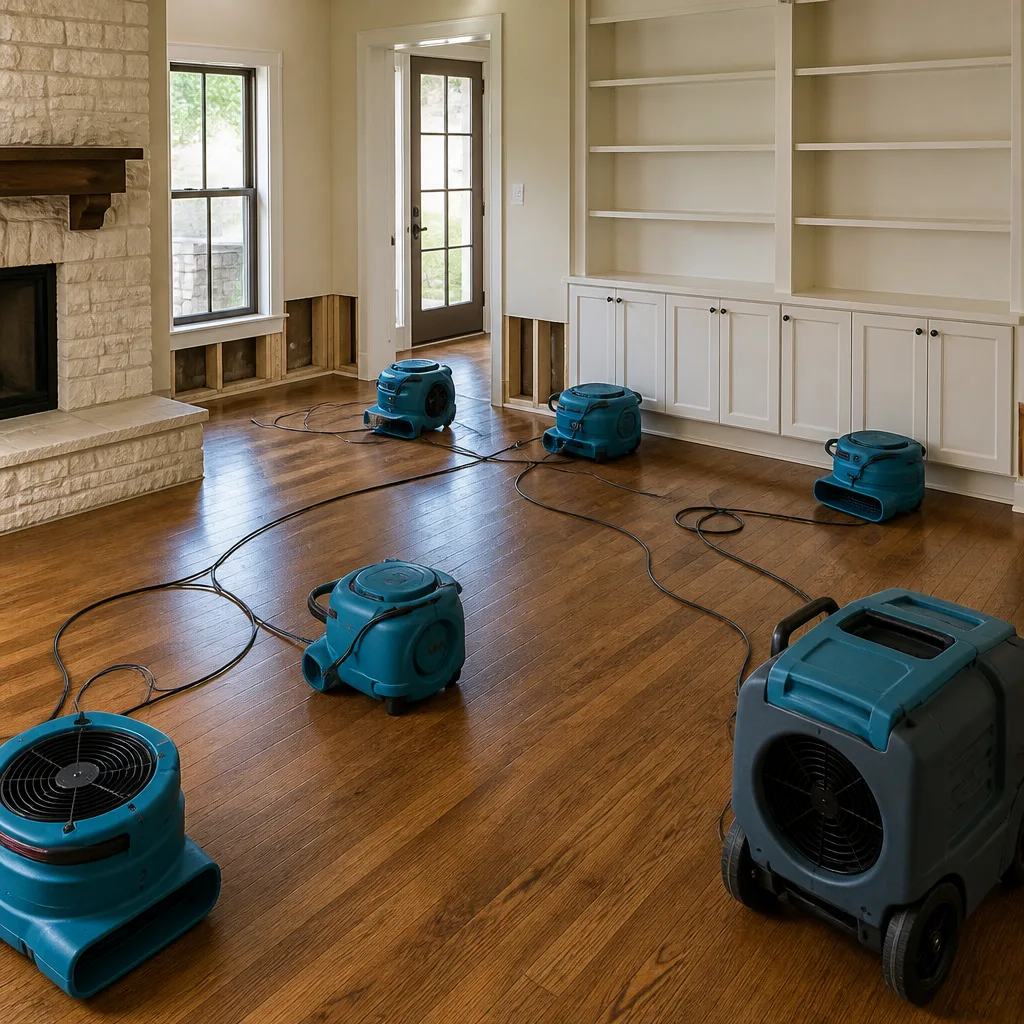
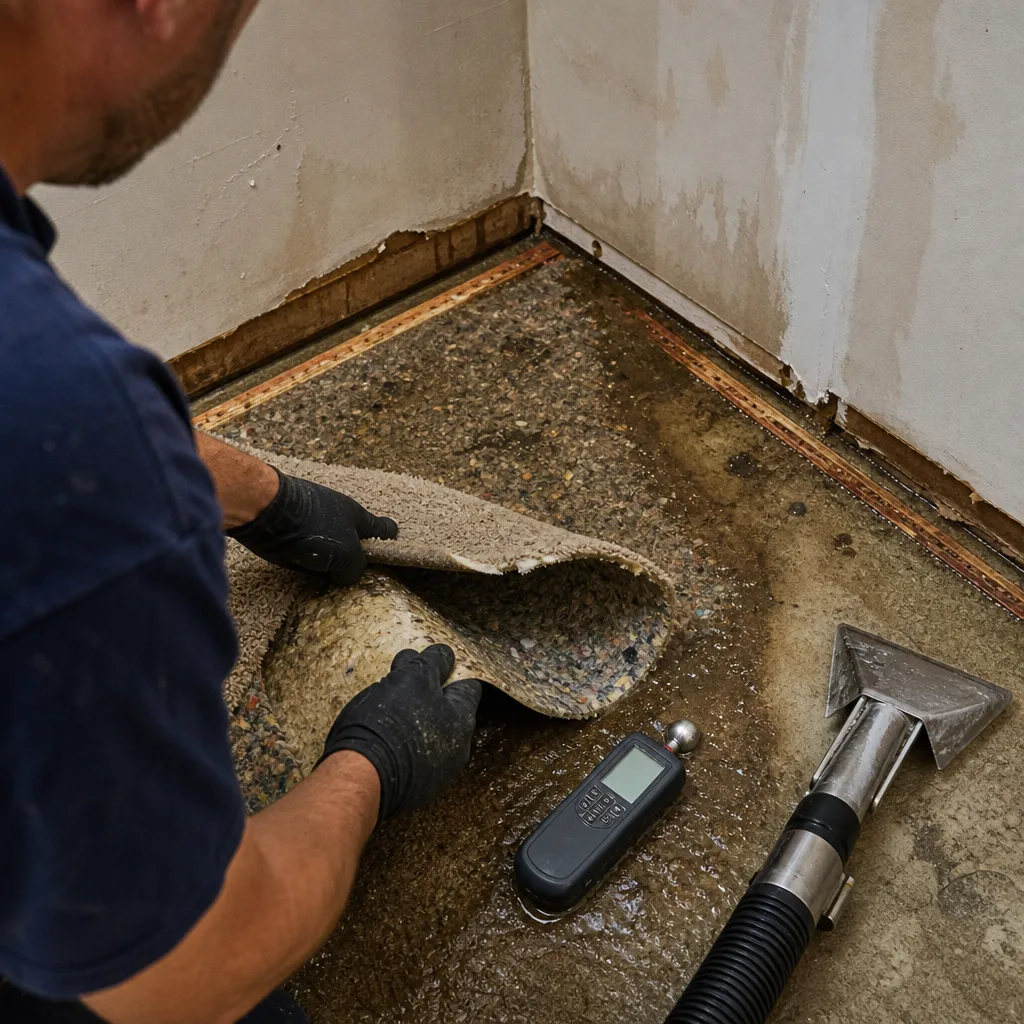
Professional moisture mapping with thermal imaging and pinless meters determines the actual extent. Surface drying is misleading; we’ve found saturated insulation behind apparently dry drywall. At this stage, decisions are made about: carpet and pad removal, drywall flood cut height, insulation extraction, and equipment placement for psychrometric drying.
Psychrometric drying - the controlled removal of moisture using temperature, airflow, and dehumidification - is what IICRC-certified technicians apply. The goal isn’t just dry surfaces; it’s restoring materials to their pre-loss equilibrium moisture content, documented daily.
Hour 24-72: Active drying and monitoring
Equipment runs continuously. Daily moisture logs record: temperature, relative humidity, specific humidity, and material moisture content at established test points. Our crews use Injectidry systems for wall cavity drying and B-Air axial fans for large-area air movement. The drying log becomes your insurance documentation.
Beyond 72 hours: Remediation assessment
If materials remained wet past 72 hours, mold assessment is indicated regardless of visible growth. We recommend professional mold evaluation before any reconstruction begins. Rebuilding over compromised substrate wastes the reconstruction investment and creates liability on resale.
Homeowners can safely do: source stopping, initial photo documentation, and moving small unaffected items. Homeowners should not do: electrical assessment in wet conditions, demolition of suspect materials without respiratory protection, or equipment placement that disturbs potential asbestos-containing materials in pre-1980 construction.
Year-Round Salt-Air Maintenance Schedule
Coastal property insurance policies contain maintenance expectations that standard inland policies don’t. Salt-air corrosion of metal components is a foreseeable peril; failure to address it can support a denial under gradual deterioration or maintenance exclusion language.
Quarterly: Visible metal inspection
Roof flashings, vent hoods, HVAC equipment cabinets, exterior electrical boxes, and door/window hardware. Look for: white powdery corrosion, pitting, paint bubbling at metal edges, and fastener failure. Photograph progression. In Manhattan Beach, components within 800 feet of the beach show accelerated degradation; components east of Highland Avenue degrade more slowly but still faster than inland equivalents.
Semi-annually: Protective coating renewal
Touch up painted metal with marine-grade formulations. Replace failing fasteners with 316 stainless steel. Lubricate operable hardware with silicone-based products that resist salt wash-off. We’ve seen garage door track corrosion cause opener strain and failure - a maintenance item that becomes a property damage claim if the door falls.
Annually: Professional HVAC coil and cabinet cleaning
Salt accumulation on condenser coils reduces efficiency and accelerates fin corrosion. More critically for our work, corroded drain pans crack and leak slowly. Annual cleaning by a licensed HVAC contractor with coil-safe chemistry is documented maintenance that supports claims if the pan fails.
Every 2-3 years: Roof fastener and flashing replacement cycle
Even 316 stainless flashings eventually degrade at cut edges and fastener points. A roofing contractor can assess whether spot repair or systematic replacement is indicated. Document the assessment and any work performed.
The documentation habit is what matters. Insurance adjusters ask for maintenance records when corrosion-related failure is involved. “We maintained it” without records is indistinguishable from “We didn’t maintain it.”
Documenting Inspections as Pre-Loss Evidence
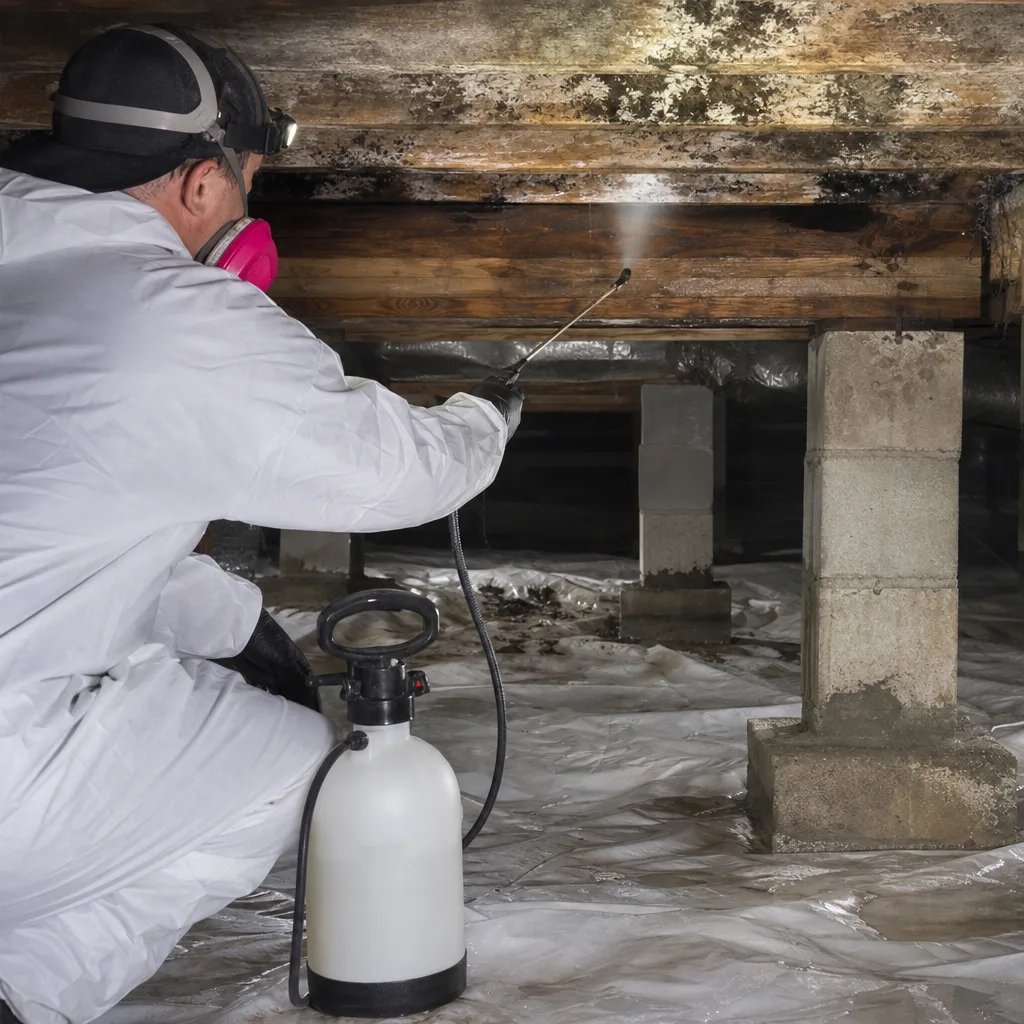
The documentation gap is why we founded this company. A former claims adjuster built our fire and water damage practice around the observation that homeowners lose legitimate claims not because the loss didn’t happen, but because they can’t prove it wasn’t gradual deterioration.
Your seasonal inspection documentation should include:
- Date-stamped photographs - every inspection, every condition noted, with the address visible in frame or in metadata.
- Moisture meter readings - location, date, reading, and instrument model. We use Delmhorst and Protimeter meters; homeowner-grade meters from reputable manufacturers are acceptable if calibrated.
- Contractor assessments and invoices - any professional evaluation, with scope and findings.
- Weather data - screenshot local conditions from a verified source for the inspection date and any event date.
- Communication records - emails to contractors, HOA maintenance requests, neighbor notifications about drainage.
Store in cloud format with automatic backup. Share access with your insurance agent. The 15 minutes per inspection is trivial against the value of a paid claim versus a denied one.
We’ve reviewed thousands of claims files. The ones that pay quickly have documentation organized by date with clear condition progression. The ones that drag have gaps, estimates without invoices, and verbal assurances that can’t be verified. Haven Standard, Clause 1 - written price before work starts - exists because verbal scopes create disputes. Your maintenance documentation should follow the same principle: if it isn’t written and dated, it didn’t happen for claims purposes.
Common Mistakes to Avoid
- Waiting for visible mold before acting. Mold is a symptom of a moisture condition that preceded it by weeks or months. By the time you see it, the remediation scope is larger and the insurance argument harder.
- Assuming marine layer moisture “dries out” by September. In north-facing wall cavities with poor ventilation, marine layer condensation can sustain elevated moisture content through October, priming the substrate for mold when the first rain adds more water.
- Skipping the October inspection because last winter was mild. Atmospheric river frequency varies dramatically year to year; 2023’s 31 atmospheric river events followed several quiet seasons. One mild winter doesn’t modify building envelope maintenance needs.
- Using bleach on mold without addressing moisture source. Bleach on porous materials can exacerbate the problem by adding water and failing to penetrate the hyphae. It also removes visible evidence while leaving active growth, complicating professional assessment.
- Failing to document “no findings” inspections. A clean inspection in October is powerful pre-loss evidence if a November storm causes failure. It proves the condition was maintained, not neglected.
- Ignoring garage and accessory structures. Insurance coverage for detached structures varies; maintenance documentation matters more when coverage is limited. We’ve seen $80,000 garage content losses with disputed coverage because the structure hadn’t been inspected in years.
- Accepting verbal repair estimates from contractors. Haven Standard, Clause 1 applies to restoration work, but the principle extends: any repair or maintenance work should have a written scope and price before commencement. Verbal agreements create disputes that documentation prevents.
When to Call a Professional
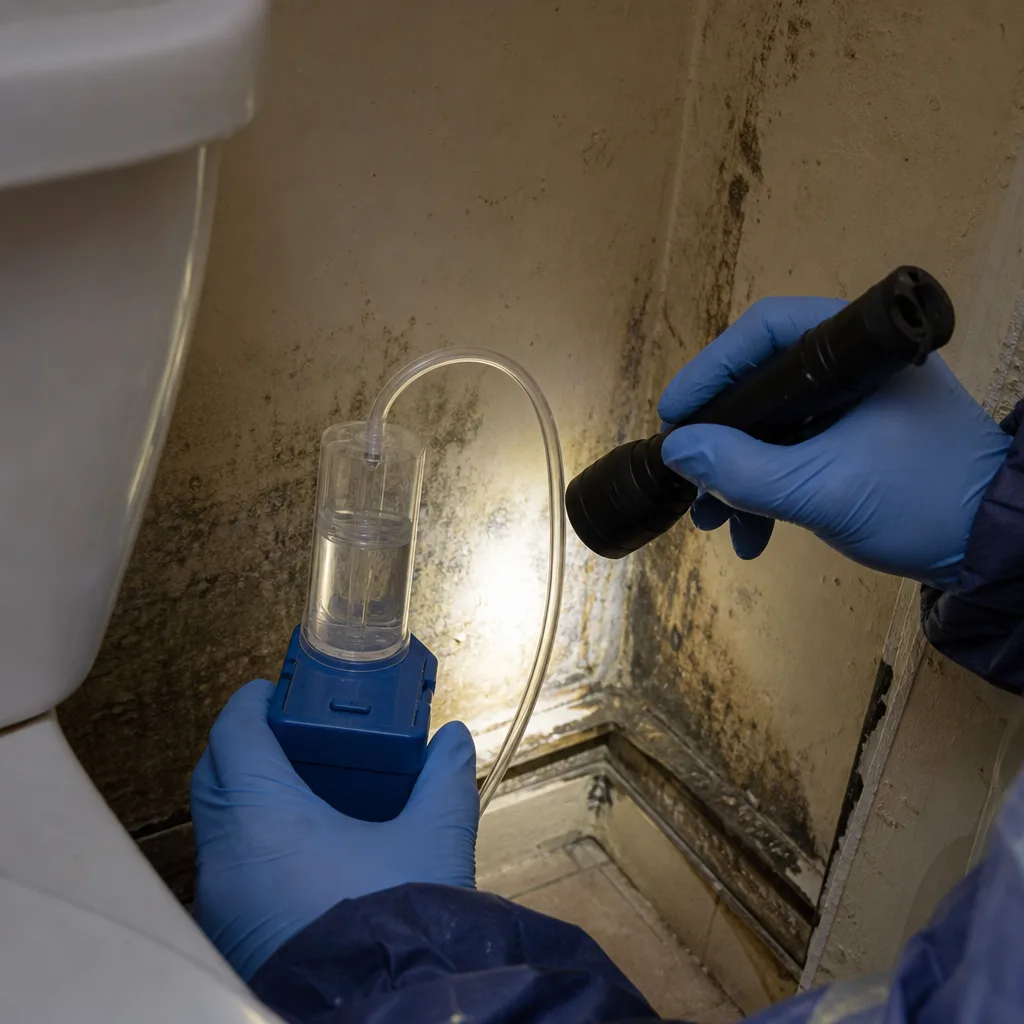
Call for professional assessment when: moisture meter readings exceed 16% WMC on wood framing; you observe water staining that reappears after cleaning; mold growth covers more than 10 square feet; any water intrusion reaches electrical panels or HVAC equipment; or you need documentation for insurance pre-loss or post-loss purposes.
DryMark Restoration Manhattan Beach offers free estimates in Manhattan Beach - call (213) 699-3658. Our assessments include moisture mapping, photo documentation, and a written scope with price before any work begins, per Haven Standard, Clause 1. We provide a Free Second Opinion on any competitor’s written estimate, and every job carries our 365-Day Done Right Promise under The Haven Standard.
Frequently Asked Questions
Professional moisture assessment and documentation runs $200-$400 for a standard single-family home; for context, see our Damage Restoration Cost Breakdown: The Manhattan Beach Homeowner’s Reference for 2026. DIY monitoring with a quality moisture meter and RH logger costs under $150 in equipment. The critical investment is time, not money - 2-3 hours per season for inspection and documentation. Call (213) 699-3658 for an exact quote - estimates are free.
Standard homeowners policies typically exclude damage from condensation and humidity unless a covered peril (such as storm damage to the building envelope) created the condition. Documentation that you actively monitored and maintained the property supports arguments that any visible damage resulted from a sudden failure, not gradual deterioration. We review policy language and documentation as part of our free estimate process.
Our live dispatch answers every call 24 hours a day, 7 days a week - no voicemail, no next-business-day callback while water is still moving. Response time during active storm events depends on road conditions and call volume, but emergency water damage calls in Manhattan Beach typically see on-site assessment within 2-4 hours. Call (213) 699-3658 to confirm current availability.
Areas under 10 square feet with an identified and corrected moisture source can sometimes be addressed with cleaning and drying, but only after professional moisture mapping confirms the source is resolved and the growth hasn’t extended beyond visible areas. We provide a written scope with price before any work begins, and our Free Second Opinion service lets you verify another contractor’s recommendation at no charge.
We coordinate directly with adjusters, providing the documented photo record, daily drying logs, and written scope that turn restoration invoices into payable claims. Our documentation is formatted to IICRC, RIA, and IFA standards because we’ve seen what adjusters accept and what they challenge. You remain the policyholder and decision-maker; we handle the technical documentation burden.
Sustained interior relative humidity above 60% requires active intervention - increased ventilation, dehumidification, or professional assessment. Below 55%, monitor monthly. Between 55% and 60%, increase monitoring frequency and verify ventilation function. These thresholds are based on psychrometric data for coastal Southern California conditions, where moderate temperatures extend mold germination windows compared to hotter inland climates.
The Bottom Line
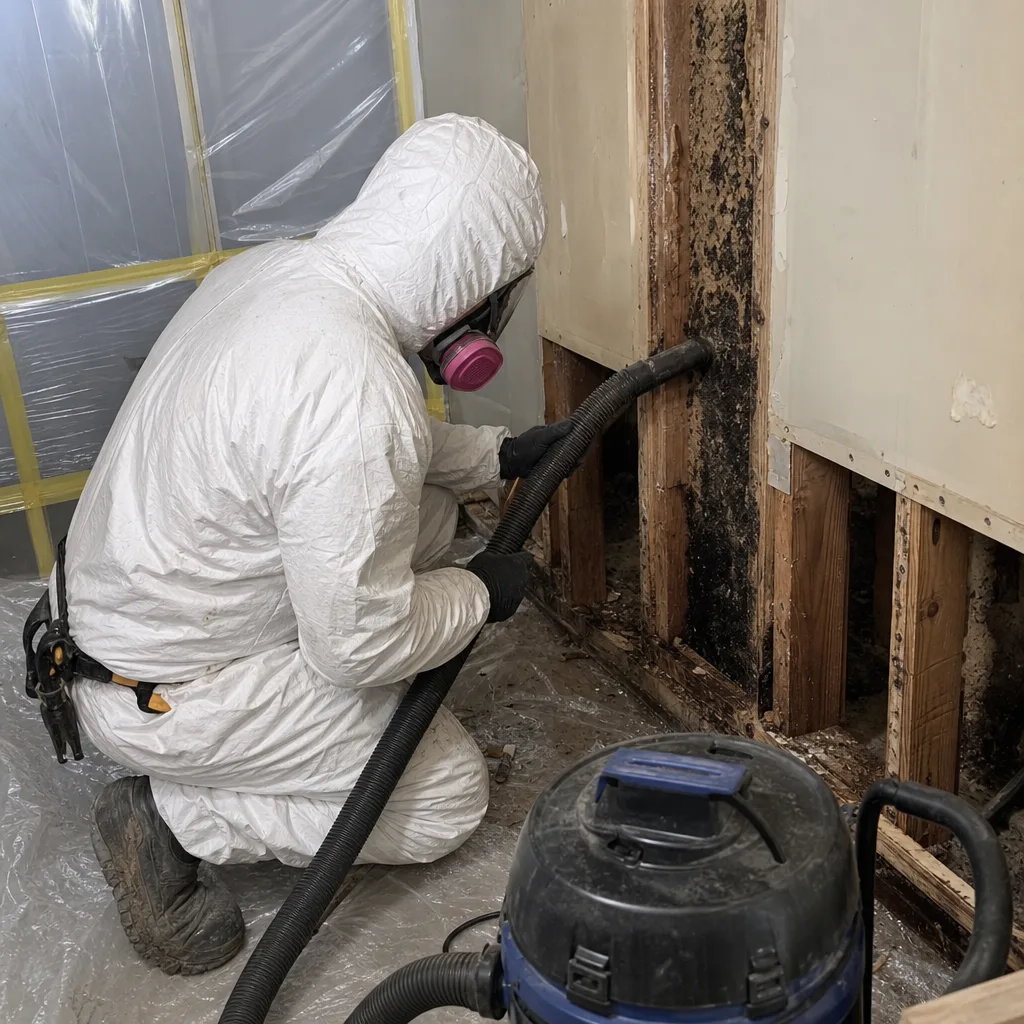
Manhattan Beach’s coastal geography compresses damage risk into two distinct seasons: marine layer condensation from May through August, and atmospheric river pressure from November through March. Effective year-round care means monitoring RH and moisture content during summer, completing a six-point exterior inspection by October 15 with full documentation, and responding within 72 hours to any winter water intrusion. Salt-air maintenance of metal components protects both the structure and your insurance position. The homeowners who fare best in claims are those who treated documentation as maintenance, not afterthought. For additional guidance, explore more guides & resources from our team.
Written by Alicia Brennan, Owner at DryMark Restoration Manhattan Beach, serving Manhattan Beach since 2011.